
Are you unsure of the model of iPod you have? Use our handy guide.
| iPod touch (7th generation) Navigation: Multi-Touch display Capacity: 32, 128, 256 GB Model number and date introduced: A2178: May 2019 iPod touch (7th generation) has an 8 MP camera and FaceTime HD camera. | 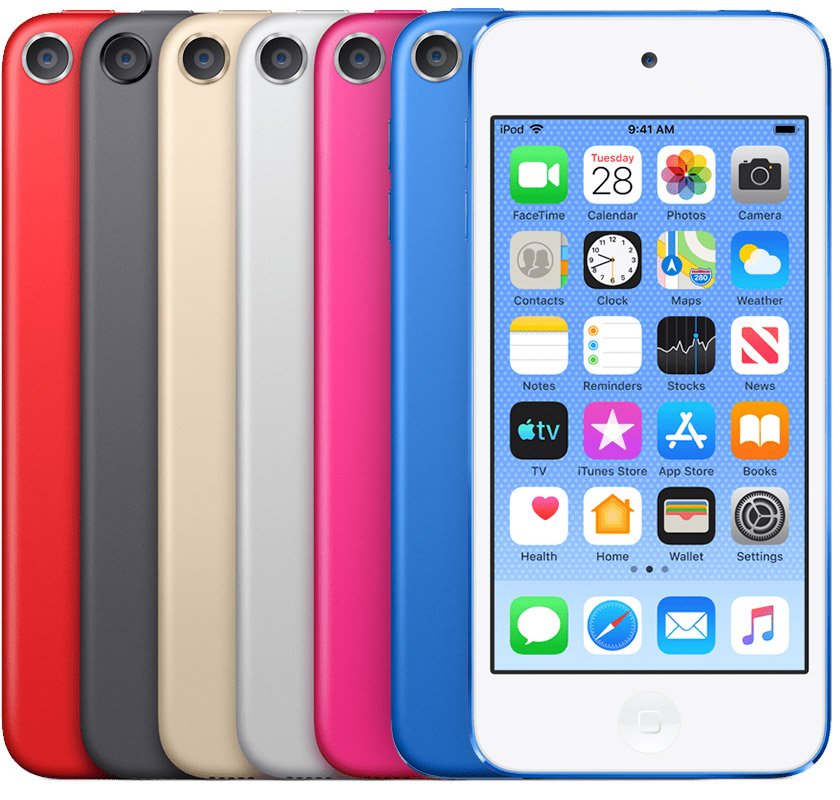 |
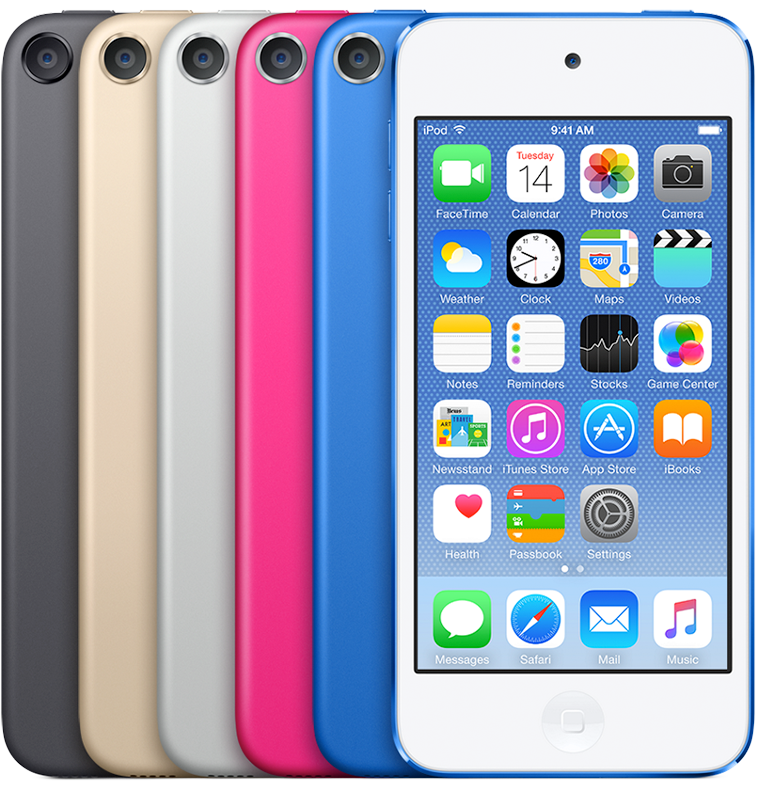 | iPod touch (6th generation) Navigation: Multi-Touch display Capacity: 16, 32, 64, 128 GB Model number and date introduced: A1574: July 2015 iPod touch (6th generation) has an iSight camera and FaceTime HD camera. |
| iPod touch (5th generation) Navigation: Multi-Touch display Capacity: 16, 32 and 64 GB Model numbers and dates introduced: A1509: June 2014 A1421: May 2013 A1421: October 2012 iPod touch (5th generation) has an iSight camera and FaceTime HD camera. The iPod touch loop is included with the 32 GB and 64 GB models. | 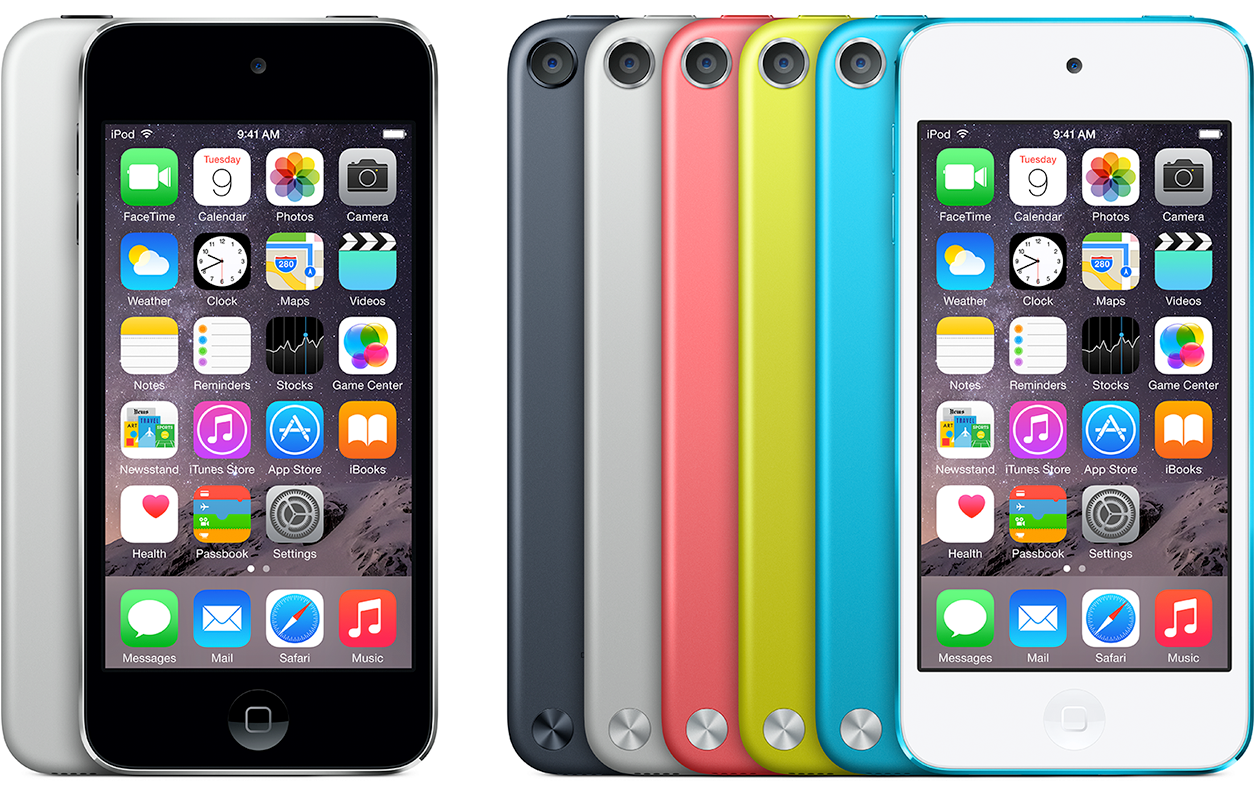 |
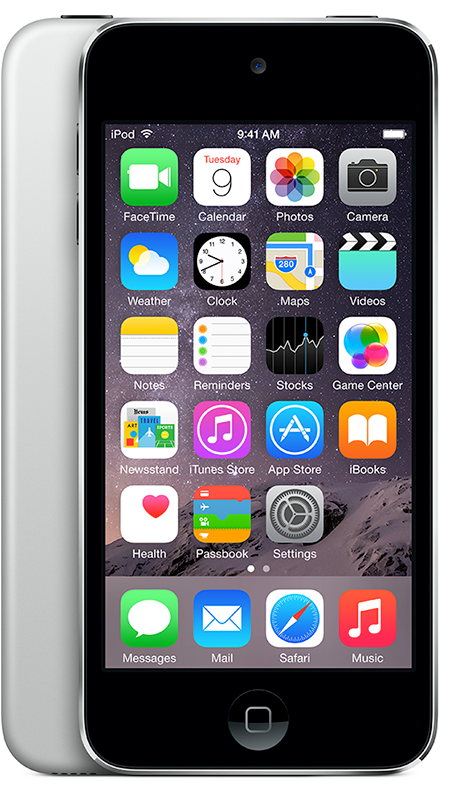 | iPod touch (5th generation 16 GB, Mid 2013) Navigation: Multi-Touch display Capacity: 16 GB Model number and date introduced: A1509: May 2013 This model is available in silver and has a FaceTime HD camera. |
| iPod touch (4th generation) Navigation: Multi-Touch display Capacity: 8, 16, 32 and 64 GB Model numbers and dates introduced: A1367: October 2012 A1367: October 2011 A1367: September 2010 iPod touch (4th generation) has an iSight camera and FaceTime HD camera. | 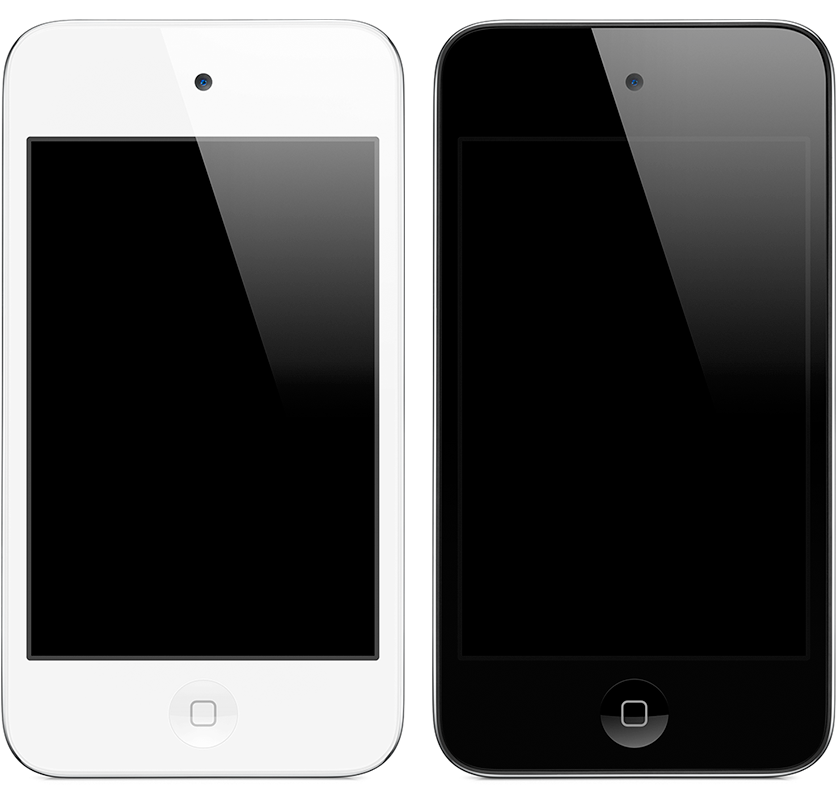 |
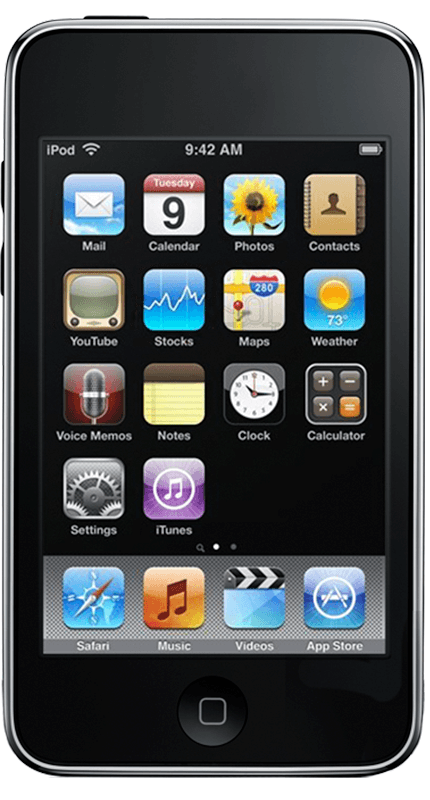 | iPod touch (3rd generation) Navigation: Multi-Touch display Capacity: 32 and 64 GB Model number and date introduced: A1318: September 2009 iPod touch (3rd generation) features a 3.5-inch (diagonal) widescreen Multi-Touch display and 32 GB or 64 GB flash drive. You can distinguish the iPod touch (3rd generation) from iPod touch (2nd generation) by looking at the back of the device. In the text below the engraving, look for the model number. |
| iPod touch (2nd generation) Navigation: Multi-Touch display Capacity: 8, 16 and 32 GB Model numbers and dates introduced: A1288: September 2008 A1319 for China mainland only: September 2008 iPod touch (2nd generation) features a 3.5-inch (diagonal) widescreen Multi-Touch display and 8 GB, 16 GB or 32 GB flash drive. You can distinguish the iPod touch (2nd generation) from the previous model by its contoured design and oval-shaped antenna cover in the back upper left-hand corner. | 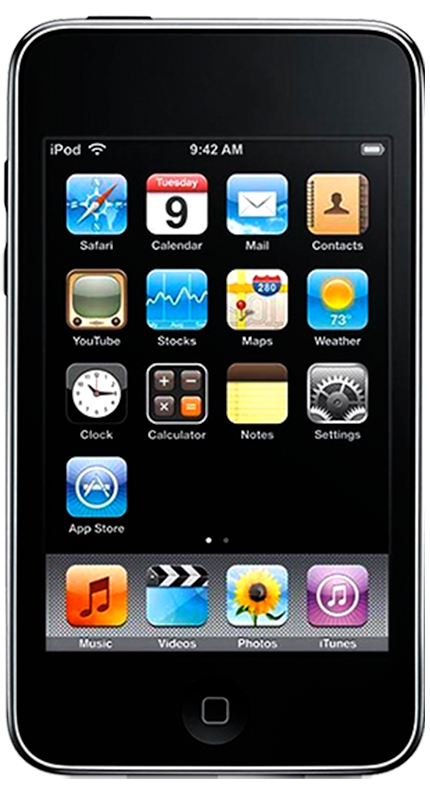 |
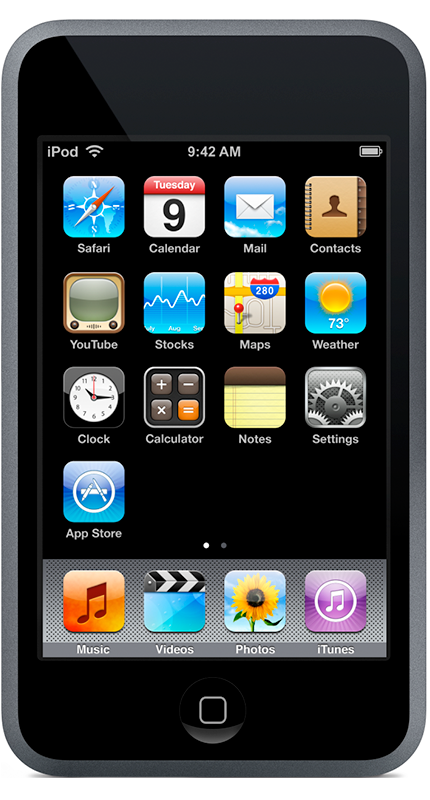 | iPod touch Navigation: Multi-Touch display Capacity: 8, 16 and 32 GB Model numbers and dates introduced: A1213: February 2008 A1213: September 2007 iPod touch features a 3.5-inch (diagonal) widescreen Multi-Touch display and 8 GB, 16 GB or 32 GB flash drive. You can browse the web with Safari and watch YouTube videos on the first-ever Wi-Fi iPod. You can also search, preview and buy songs from the iTunes Wi-Fi Music Store on iPod touch. |
| iPod nano (7th generation) Navigation: Multi-Touch display Capacity: 16 GB Model number and date introduced: A1446: October 2012 | 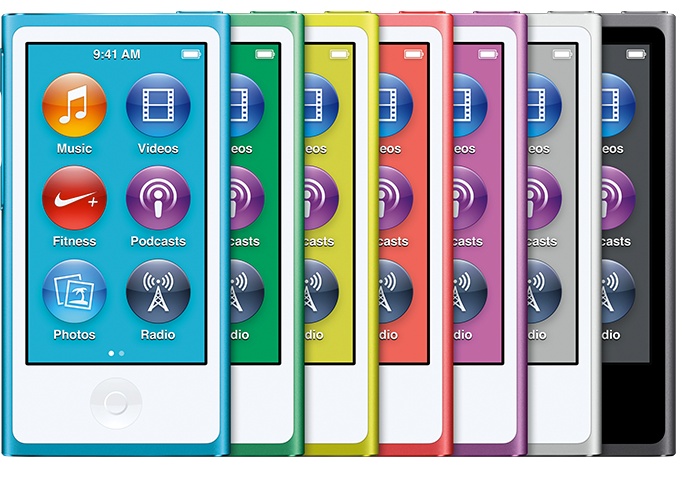 |
 | iPod nano (6th generation) Navigation: Multi-Touch display Capacity: 8 and 16 GB Model number and date introduced: A1366: September 2010 |
| iPod nano (5th generation) Navigation: Click Wheel Capacity: 8 and 16 GB Model number and date introduced: A1320: September 2009 You can distinguish the iPod nano (5th generation) from previous iPod nano models by: Its taller screen when compared to iPod nano (4th generation) Its polished anodised aluminium finish The inclusion of a camera and microphone on the back of the device | 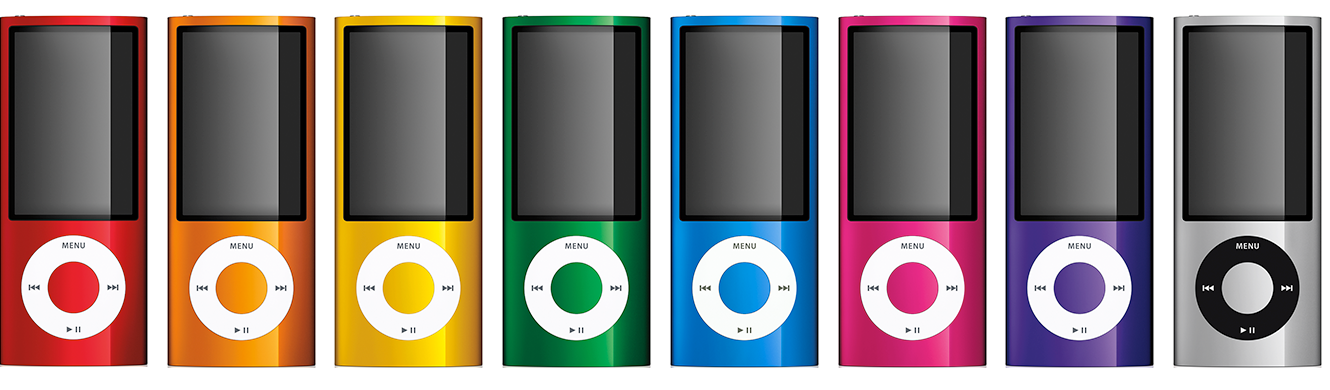 |
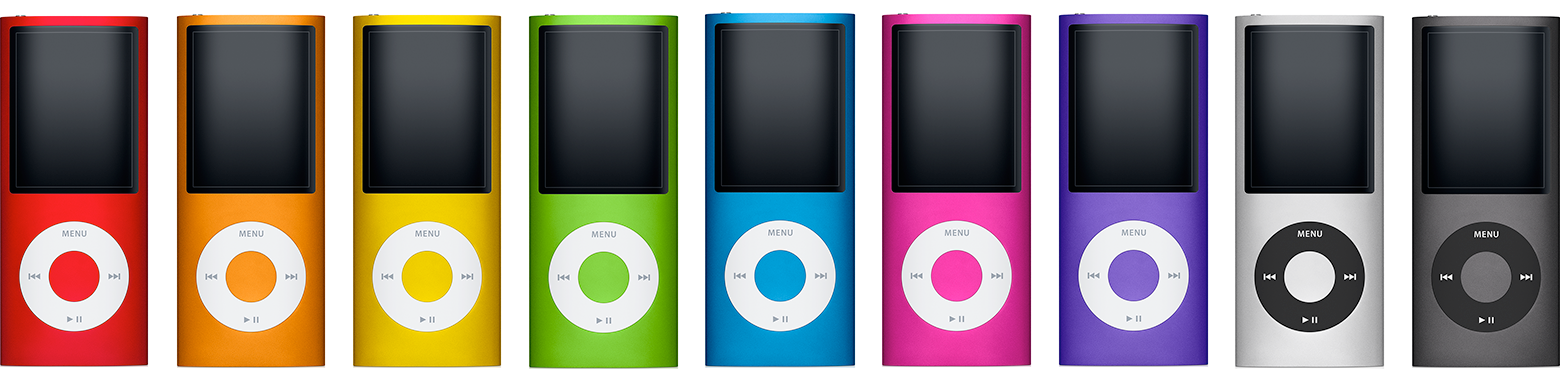 | iPod nano (4th generation) Navigation: Click Wheel Capacity: 8 and 16 GB Model number and date introduced: A1285: September 2008 You can distinguish the iPod nano (4th generation) from previous iPod nano models by: Its taller screen Its curved surface Its oval shape when seen from the top or bottom The inclusion of an accelerometer that is used by the Shake feature. |
| iPod nano (3rd generation) Navigation: Click Wheel Capacity: 4 and 8 GB Model number and date introduced: A1236: September 2007 You can distinguish the iPod nano (3rd generation) from previous iPod nano models by: Its wider screen Hold switch is on the bottom Its ability to play video The last three characters of the serial number will be one of these: YOP, YOR, YXR, YXT, YXV or YXX. | 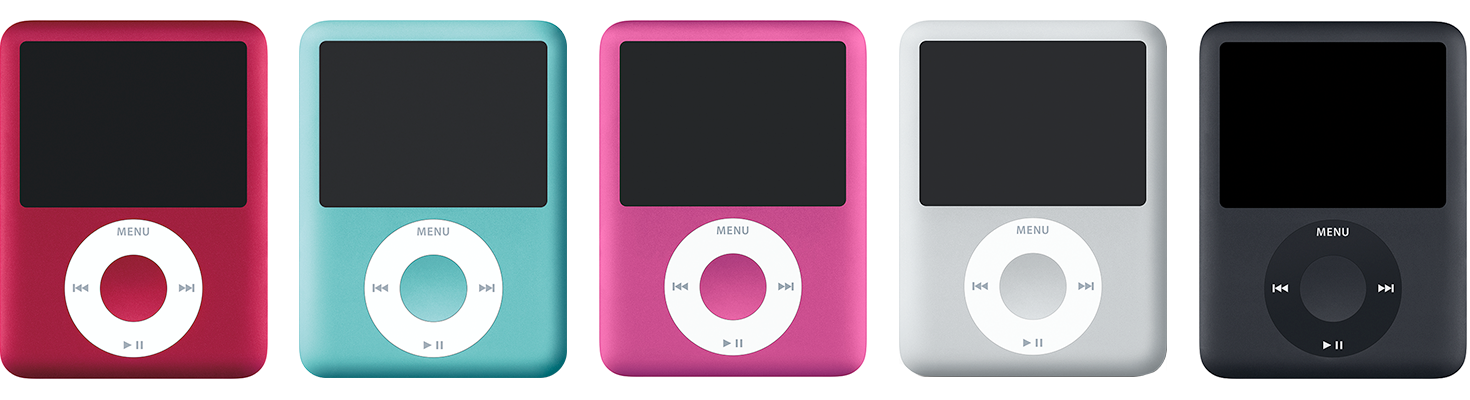 |
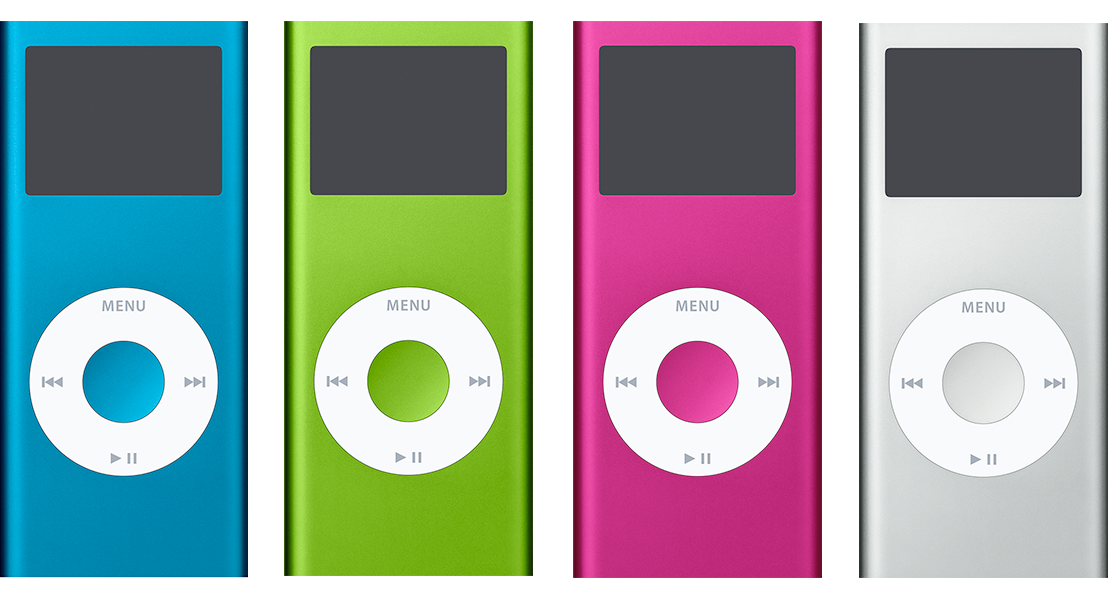 | iPod nano (2nd generation) Navigation: Click Wheel Capacity: 2, 4 and 8 GB Model number and date introduced: A1199: September 2006 You can distinguish the iPod nano (2nd generation) from other models by: Its smaller size Its colours The dock connector and headphone port are both located on the bottom of the device |
| iPod mini (2nd generation) Navigation: Click Wheel Capacity: 4 and 6 GB Model number and date introduced: A1051: February 2005 You can distinguish the iPod mini (2nd generation) models from the original iPod mini models by: The hard-drive size is engraved on back of the device The Click Wheel text colour matches the colour of the device | 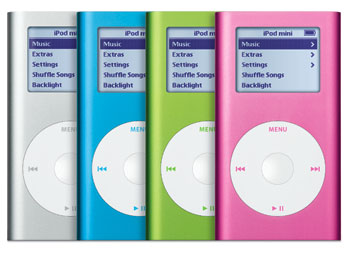 |
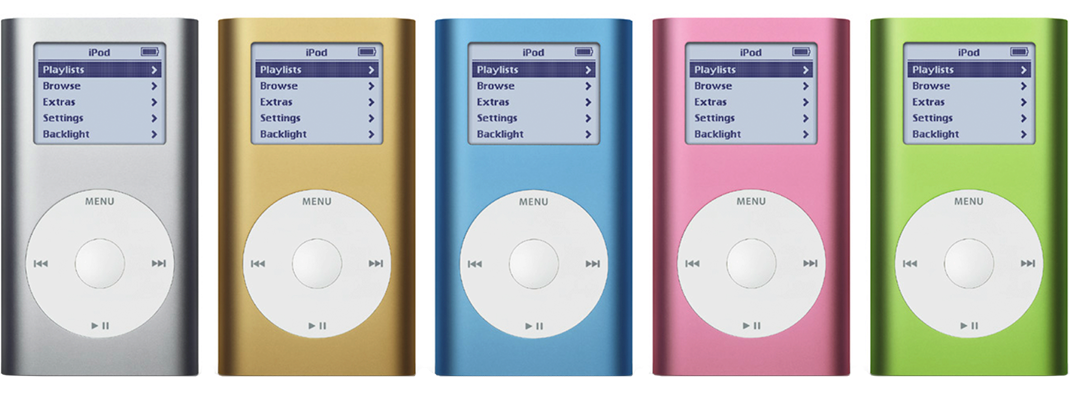 | iPod mini Navigation: Click Wheel Capacity: 4 GB Model number and date introduced: A1051: January 2004 iPod mini is distinguished from other models by: Its smaller size Its colours The Hold switch, which is on the top-left side The Click Wheel’s button labels, which are on the wheel itself |
| iPod classic 160 GB (Late 2009) Navigation: Click Wheel Capacity: 160 GB (slim rear) Model number and date introduced: A1238: September 2009 The iPod classic 160 GB (Late 2009) is a hard drive-based iPod featuring a large, widescreen colour display, a Click Wheel, and the capability of displaying photos and videos. It uses USB for syncing. | 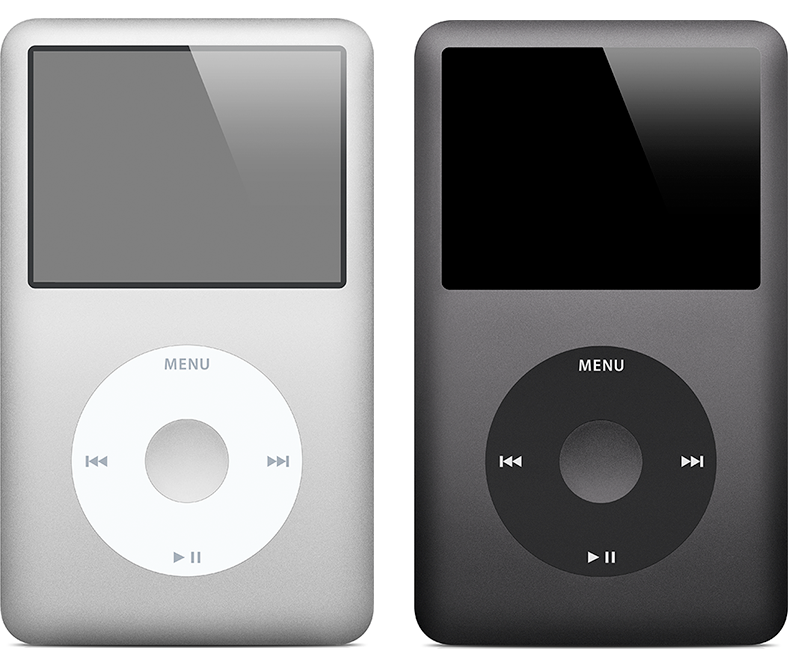 |
| iPod classic (120 GB) Navigation: Click Wheel Capacity: 120 GB Model number and date introduced: A1238: September 2008 The iPod classic (120 GB) is a hard drive-based iPod featuring a large, widescreen colour display, a Click Wheel, and the capability of displaying photos and videos. It uses USB for syncing. |
| iPod classic Navigation: Click Wheel Capacity: 80 and 160 GB Model number and date introduced: A1238: September 2007 The iPod classic is a hard drive-based iPod featuring a large, widescreen colour display, a Click Wheel, and the capability of displaying photos and videos. It uses USB for syncing. The last three characters of the serial number will be one of these: Y5N, YMU, YMV or YMX. | |
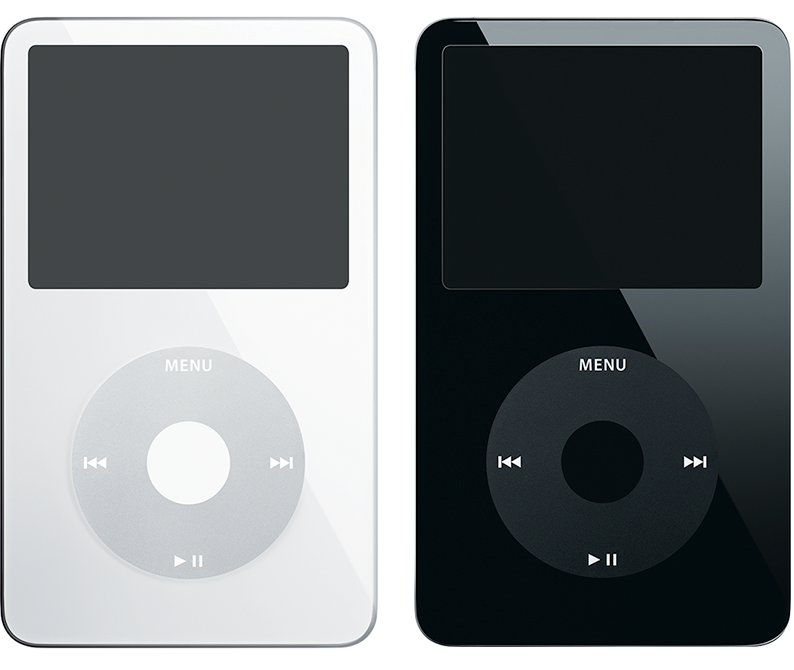 | iPod (5th generation Late 2006) – also known as iPod with video or Fifth Generation iPod Navigation: Click Wheel Capacity: 30 and 80 GB Model number and date introduced: A1238: September 2006 The last three characters of the serial number will be one of these: V9K, V9P, V9M, V9R, V9L, V9N, V9Q, V9S, WU9, WUA, WUB, WUC or X3N. The Fifth Generation U2 Special Edition iPod (30 GB Late 2006) serial numbers last three characters are W9G. |
| iPod (5th generation) – also known as iPod with video or Fifth Generation iPod Navigation: Click Wheel Capacity: 30 and 60 GB Model number and date introduced: A1238: October 2005 The iPod (5th generation) is a hard drive-based iPod featuring a large, widescreen colour display, a Click Wheel, and the capability of displaying photos and videos. It uses USB for syncing. | |
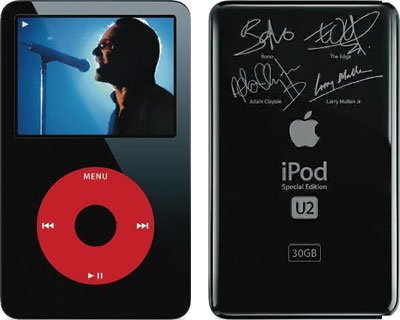 | iPod Special Edition U2 Navigation: Click Wheel Capacity: 20 and 30 GB Model numbers and dates introduced: A1136: September 2006 A1136: June 2006 A1099: June 2005 A1059: October 2004 The iPod Special Edition U2 is a standard iPod model with some differences, including: black plastic exterior, red Click Wheel, signatures of the U2 band members engraved on the back, and “iPod Special Edition U2” engraved on the back. The first model was based on an iPod (Click Wheel) with a 20-GB hard drive. In June 2005, a new version of the iPod Special Edition U2 was introduced that was based on an iPod with colour display. These are both also considered fourth-generation iPod models. In June 2006, a new version of the iPod Special Edition U2 was introduced that is based on a 5th-generation iPod (also known as iPod with video) with a 30-GB hard drive. In September 2006, a model based on the iPod (5th generation Late 2006) was introduced. The last three characters of the serial number are W9G. |
| iPod with colour display Navigation: Click Wheel Capacity: 20 and 60 GB Model number and date introduced: A1099: June 2005 iPod and iPod photo are now one and the same, with every white iPod boasting a full-colour display. They continue to have the same controls as iPod (Click Wheel) but now all models have a colour display like iPod photo – ideal for viewing album artwork and playing slideshows. These are considered fourth-generation models along with iPod (Click Wheel). | 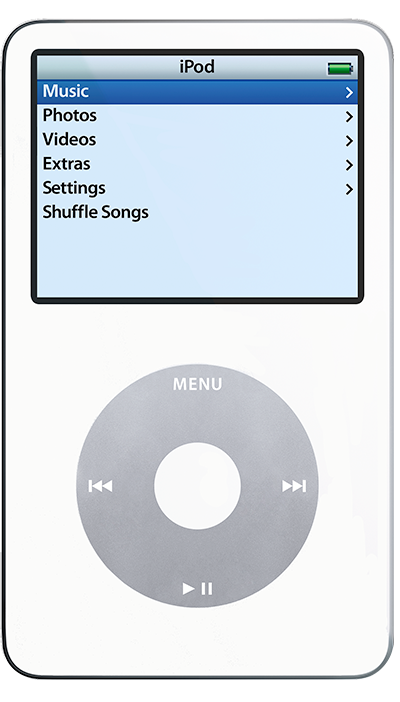 |
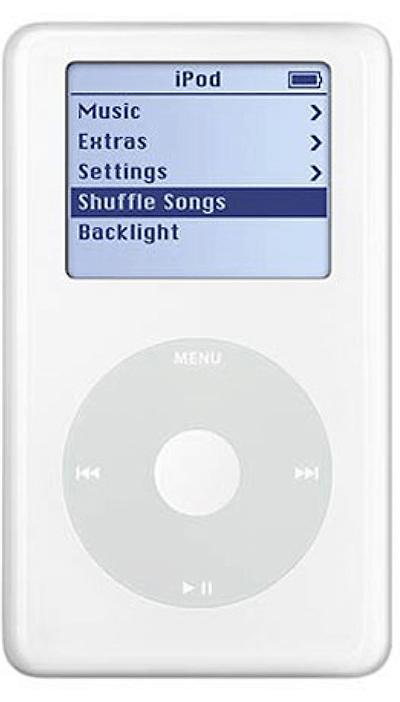 | iPod (Click Wheel) Navigation: Click Wheel Capacity: 20 and 40 GB Model number and date introduced: A1059: July 2004 iPod (Click Wheel) models have a Click Wheel like the iPod mini, but are larger and the hold switch is on the top-right side. iPod (Click Wheel) models have a monochrome display. iPod (Click Wheel) is referred to as the fourth-generation iPod. |
| iPod (Dock Connector) Navigation: Touch Wheel Capacity: 10, 15, 20, 30 and 40 GB Model numbers and dates introduced: A1040: September 2003 A1040: April 2003 iPod (dock connector) models have a dock connector on the bottom. Newer iPod models like iPod (Click Wheel) and iPod mini also have a dock connector, but the iPod (Dock Connector) has a touch wheel instead of a Click Wheel and the four control buttons are above the touch wheel. iPod (Dock Connector) models are referred to as third-generation iPod models. | 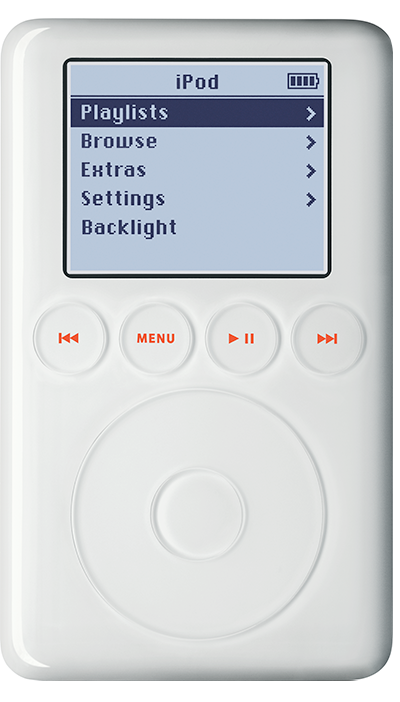 |
| iPod (Touch Wheel) Navigation: Touch Wheel Capacity: 10 and 20 GB Model number and date introduced: A1019: July 2002 All iPod (Touch Wheel) models have a FireWire port cover. Scroll wheel models don’t, and dock connector models don’t have a FireWire port. The iPod (Touch Wheel) model controls look similar to the iPod (Scroll Wheel) but the touch wheel itself doesn’t turn. iPod (Touch Wheel) models are considered second-generation iPod models. | 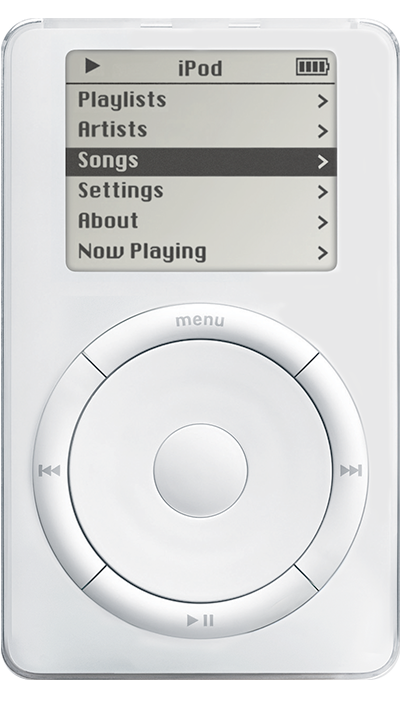 |
| iPod (Scroll Wheel) Navigation: Scroll Wheel Capacity: 5 and 10 GB Model numbers and dates introduced: M8541: March 2002 M8541: October 2001 iPod (Scroll Wheel) models have a scroll wheel that physically turns. The controls (Play, Menu, Next, Previous) are in a circle around the wheel. iPod (Scroll Wheel) models are referred to as first-generation iPod models. |